The airport Terminal is an urban public building, a symbol of national, political, economic, and cultural prestige, and is located far from the city, but is connected directly to it. It does not border another neighboring building, is accessible in space, and is not bound by strict questions of inclusion in the immediate adjacent built environment. All its sides are free and offered for architectural treatment and expression.
Millions of people of different nationalities, social strata, ages, perceptions, education, aesthetics, origins, and destinations meet. The airport terminal is the first building one encounters when arriving at a place, so it is necessary to express at least cultural elements or symbols of that place.
Client
University of Thessaly
Work
Architecture
Date
2022
CONCEPT
01
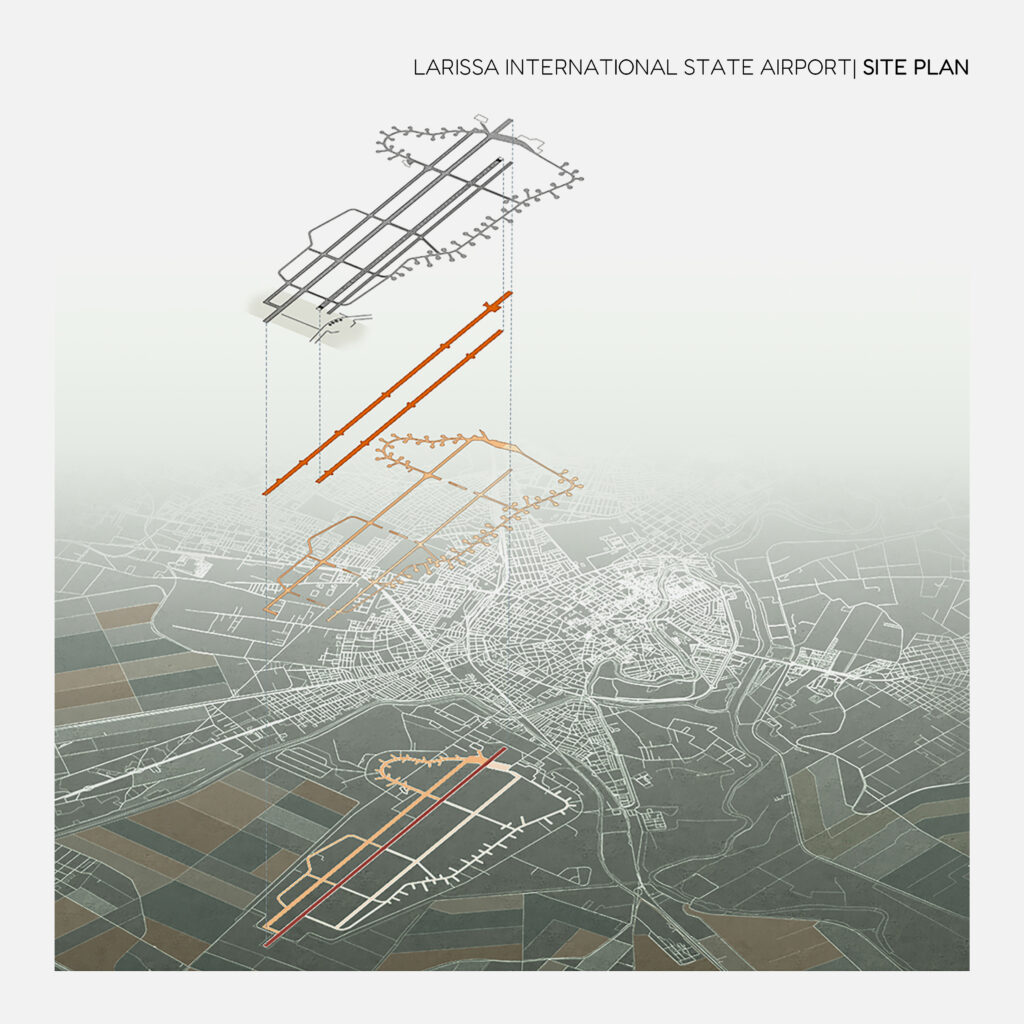
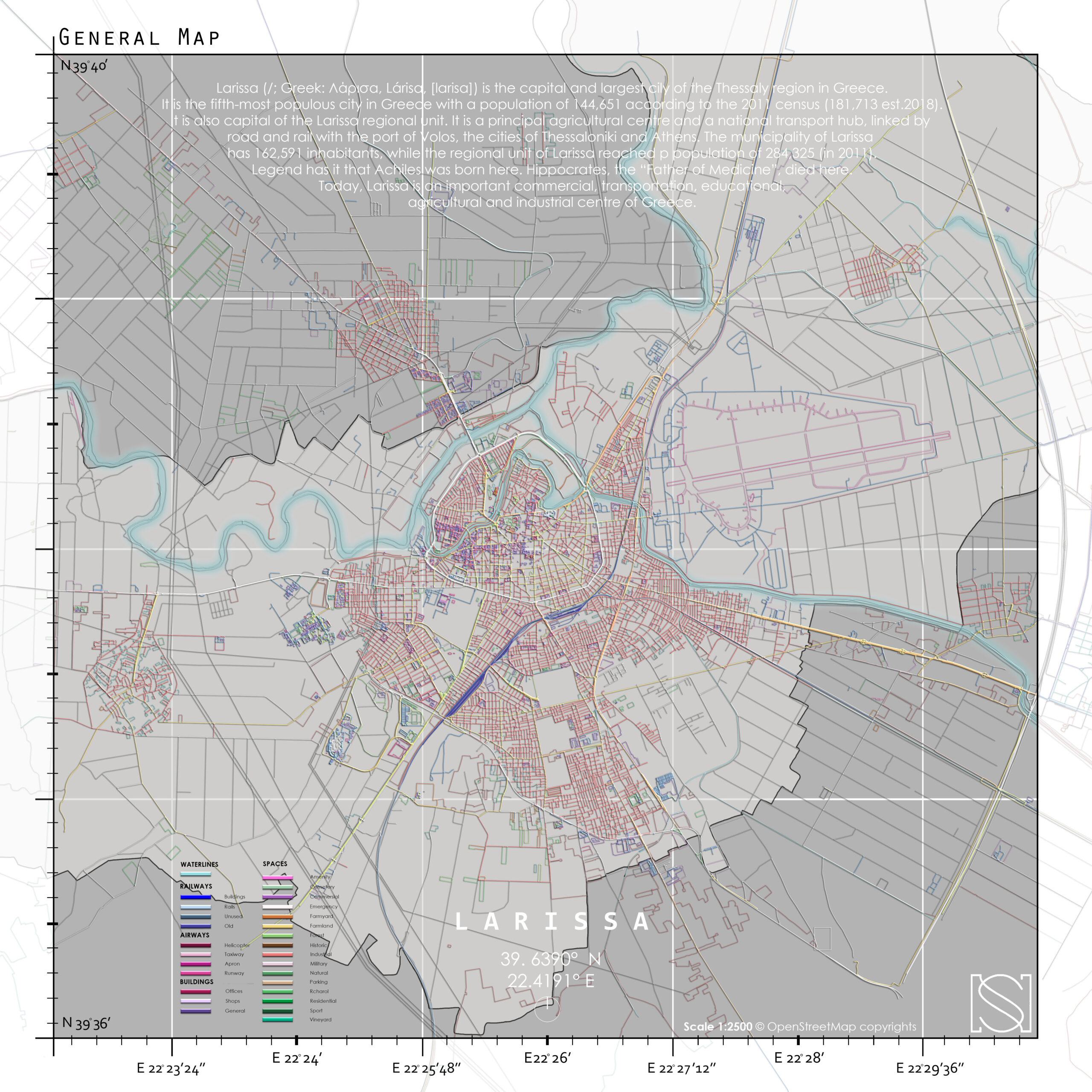
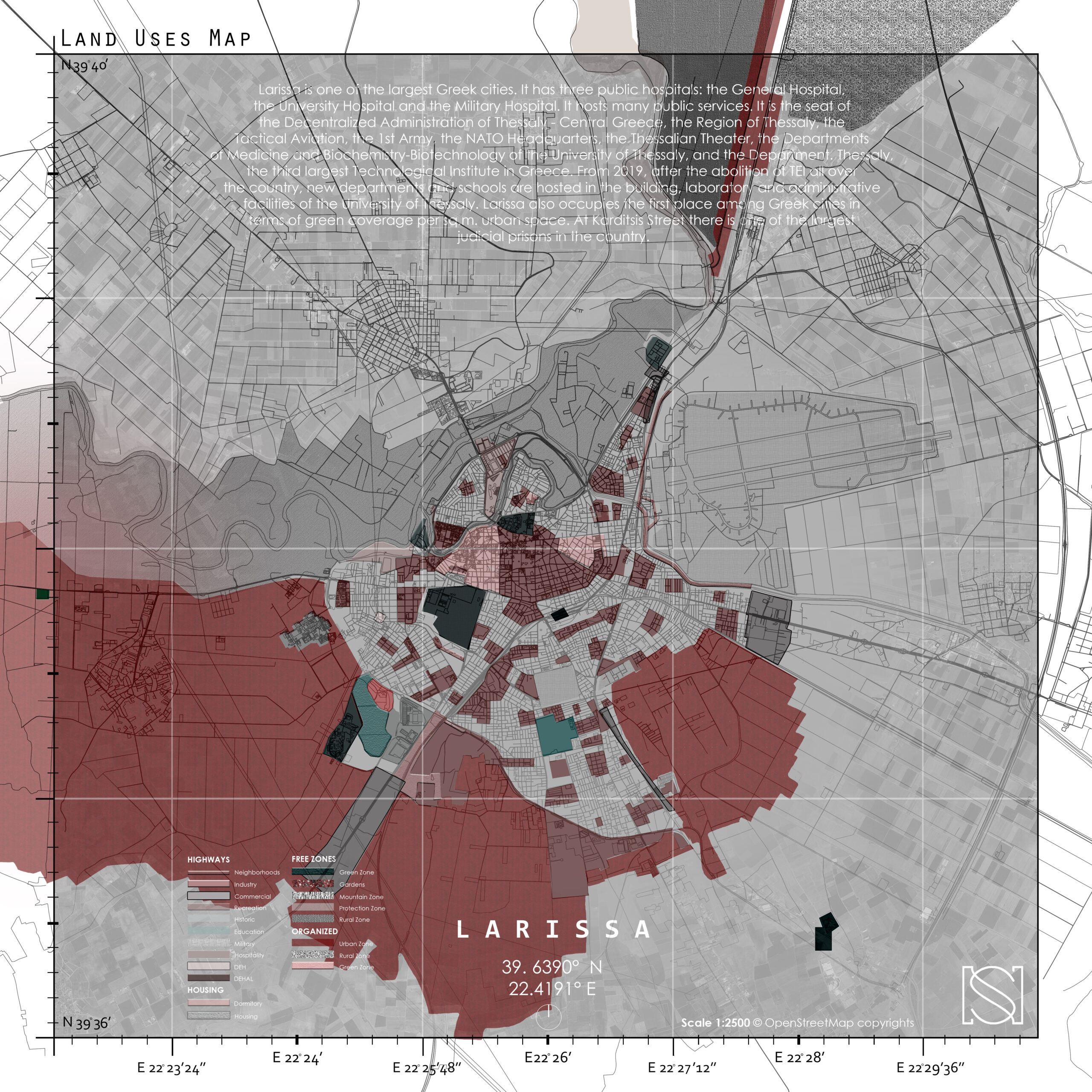
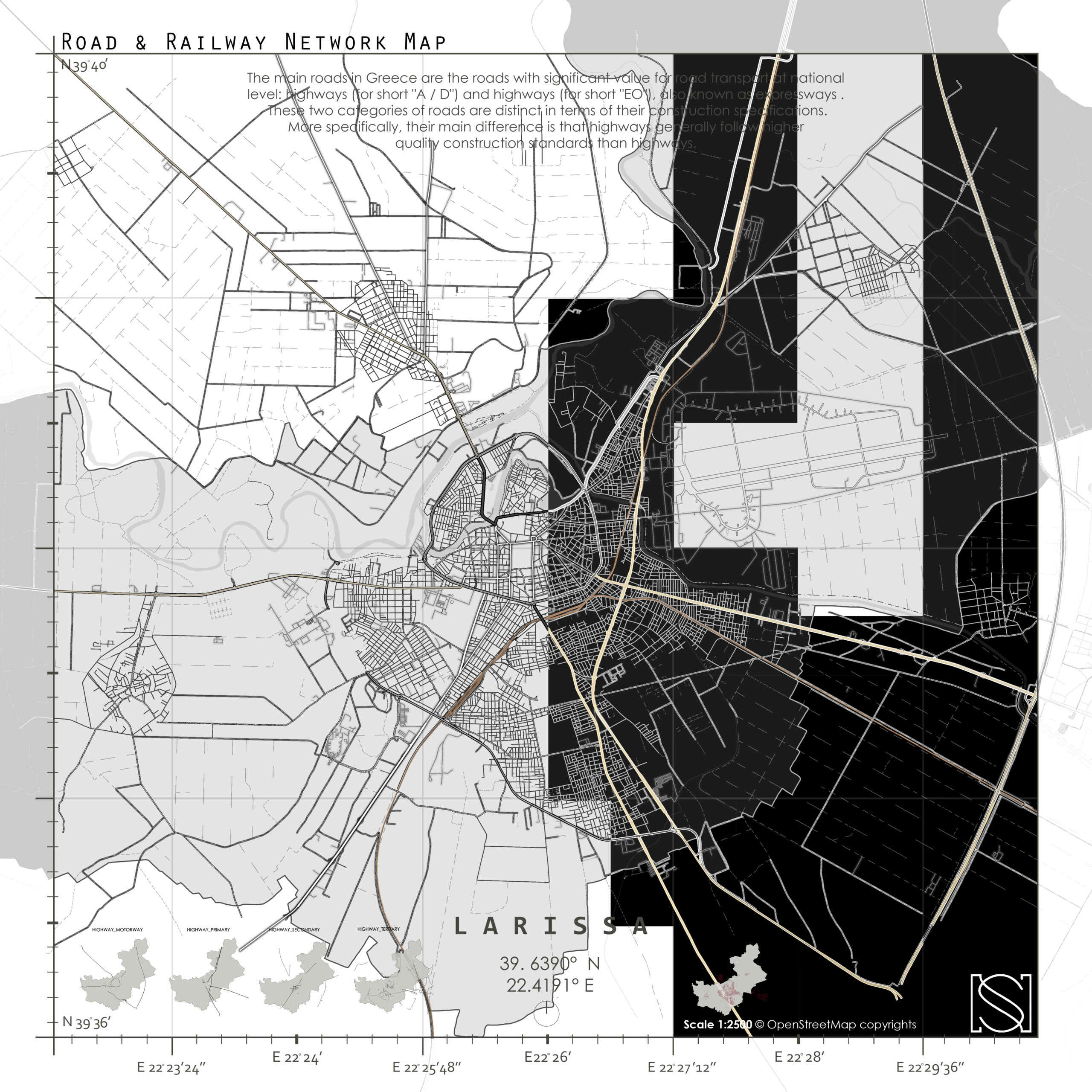
In recent years, the need to establish a new airport has arisen. The lion’s share of all placements, with a rough estimate, is held by Larissa citizens who believe that their city needs as soon as possible a public airport. Larissa city is considered one of Greece’s most important and fastest-growing urban and commercial centers, as well as o a communications and transportation hub. At present, Larissa has airport facilities, but only of a military nature, the Larissa Air Base. Previously, this airport operated flights of a civilian nature in cooperation with Olympic Aviation. However, its operation as a civilian airport was interrupted due to its lack of facilities and reduced traffic.
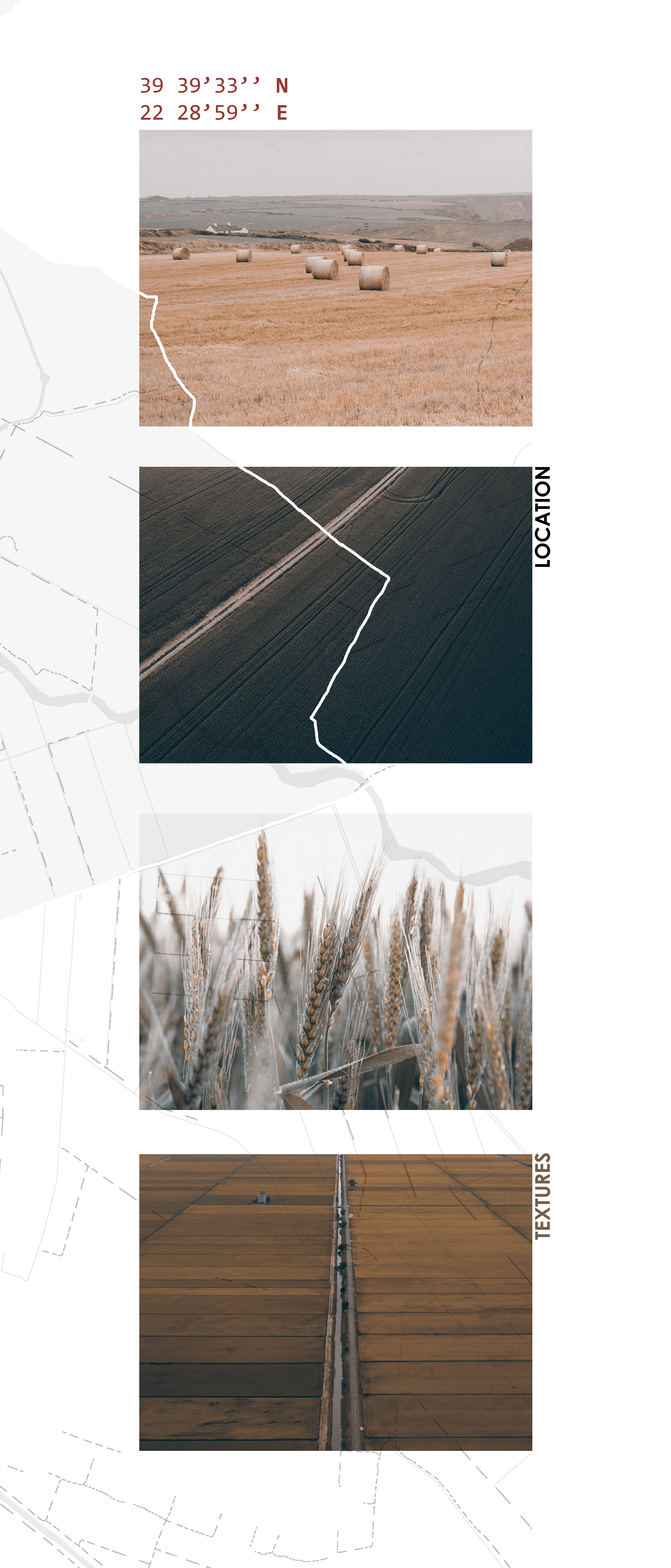
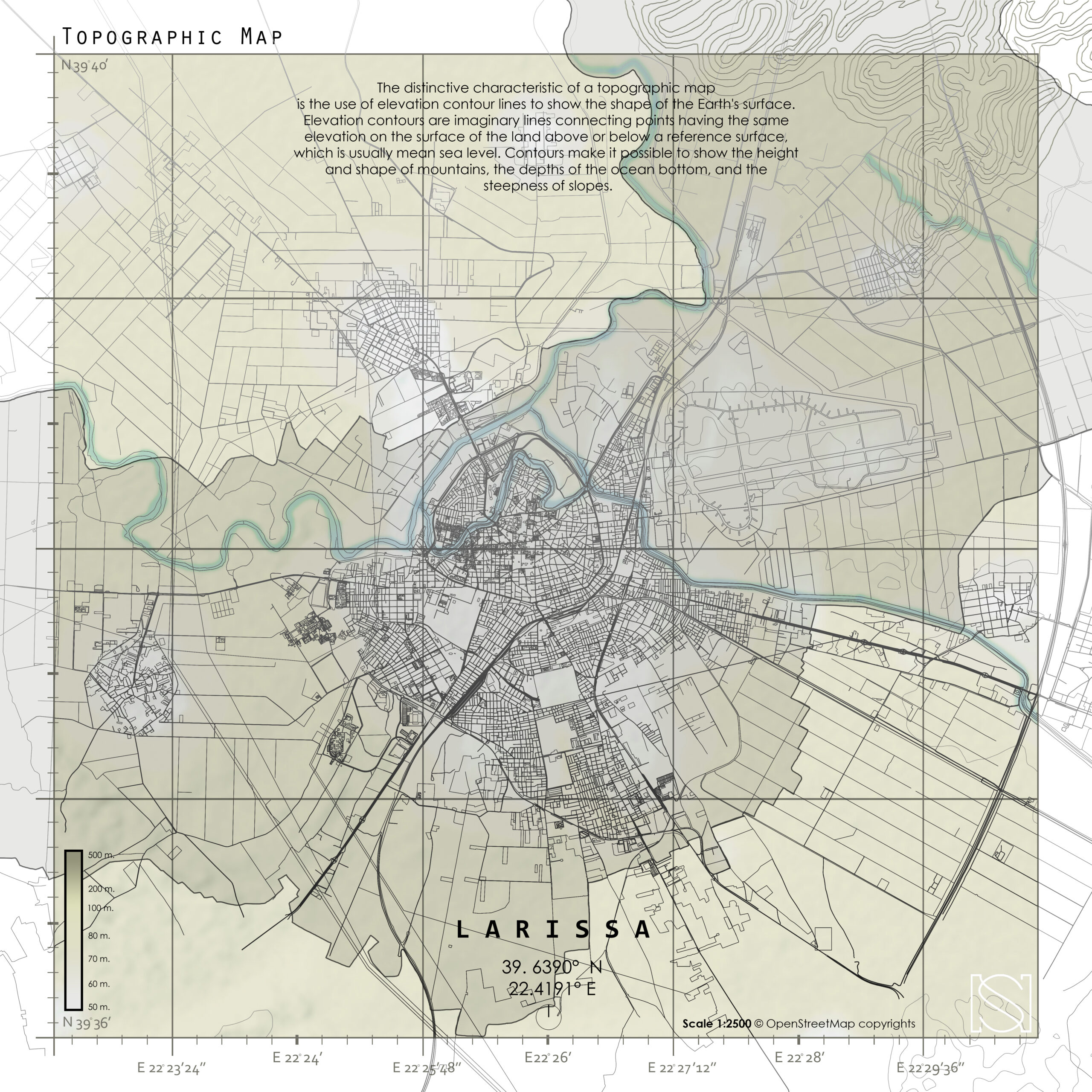
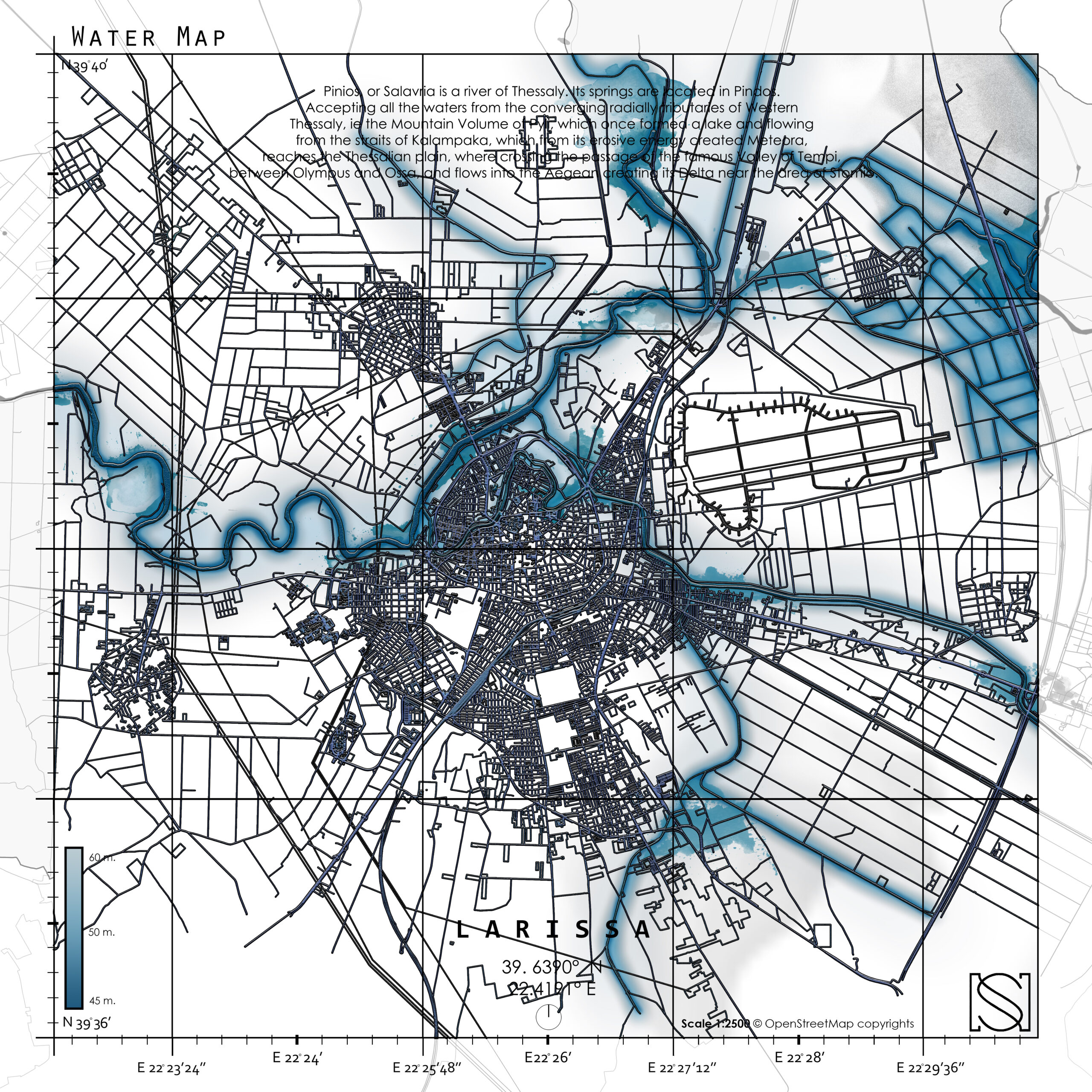
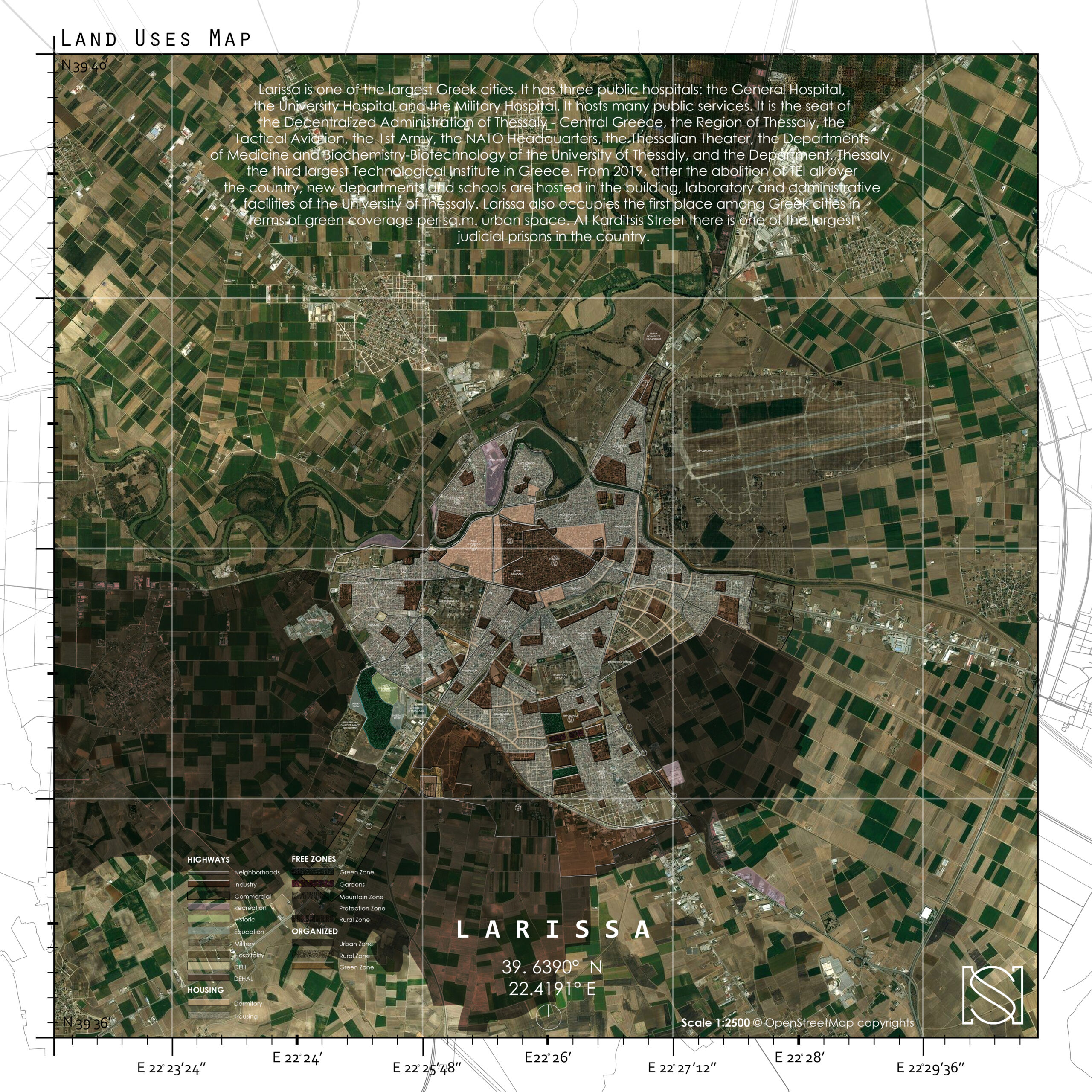
Larissa is a large town that stretches across the largest lowland area of Greece, the Thessalian plain. Countless expanses of cultivated fields surround the city and create a set of random rectangular patterns in shades of green and brown. The entire urban fabric is connected to the surrounding crops of the fields creating a “smooth morphological continuity” with minimal height differences knowns as “hills”. Known over the years for her intense involvement with rural life and grain production. My inspiration is based on the main life source, the employment and economy of the city, the plain, and specifically the grains.
DESCRIPTION
02
Due to the strictness of the schedules, the movements in the interior are continuous and fast causing stress to the people. Therefore, its design should aim to reassure them and create a sense of security. The fastest approach to this goal is to incorporate nature into it.
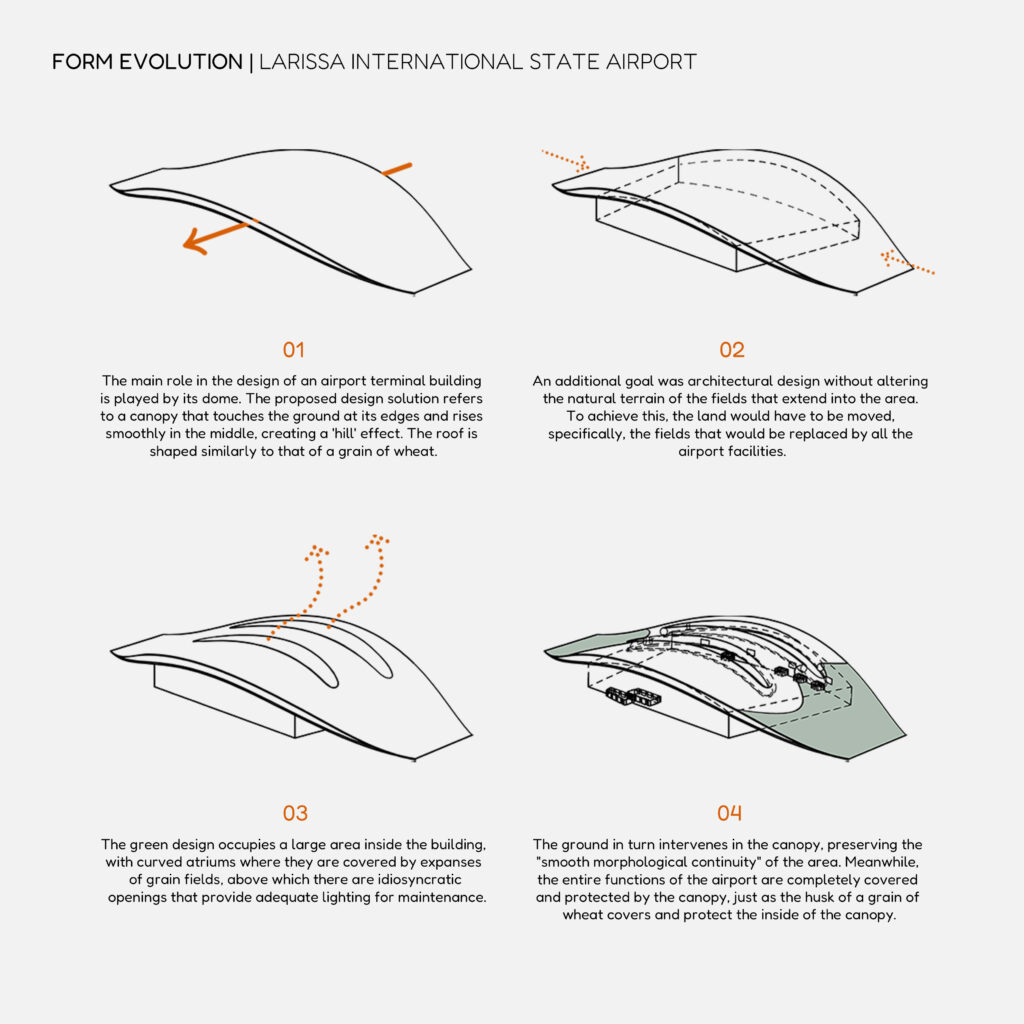
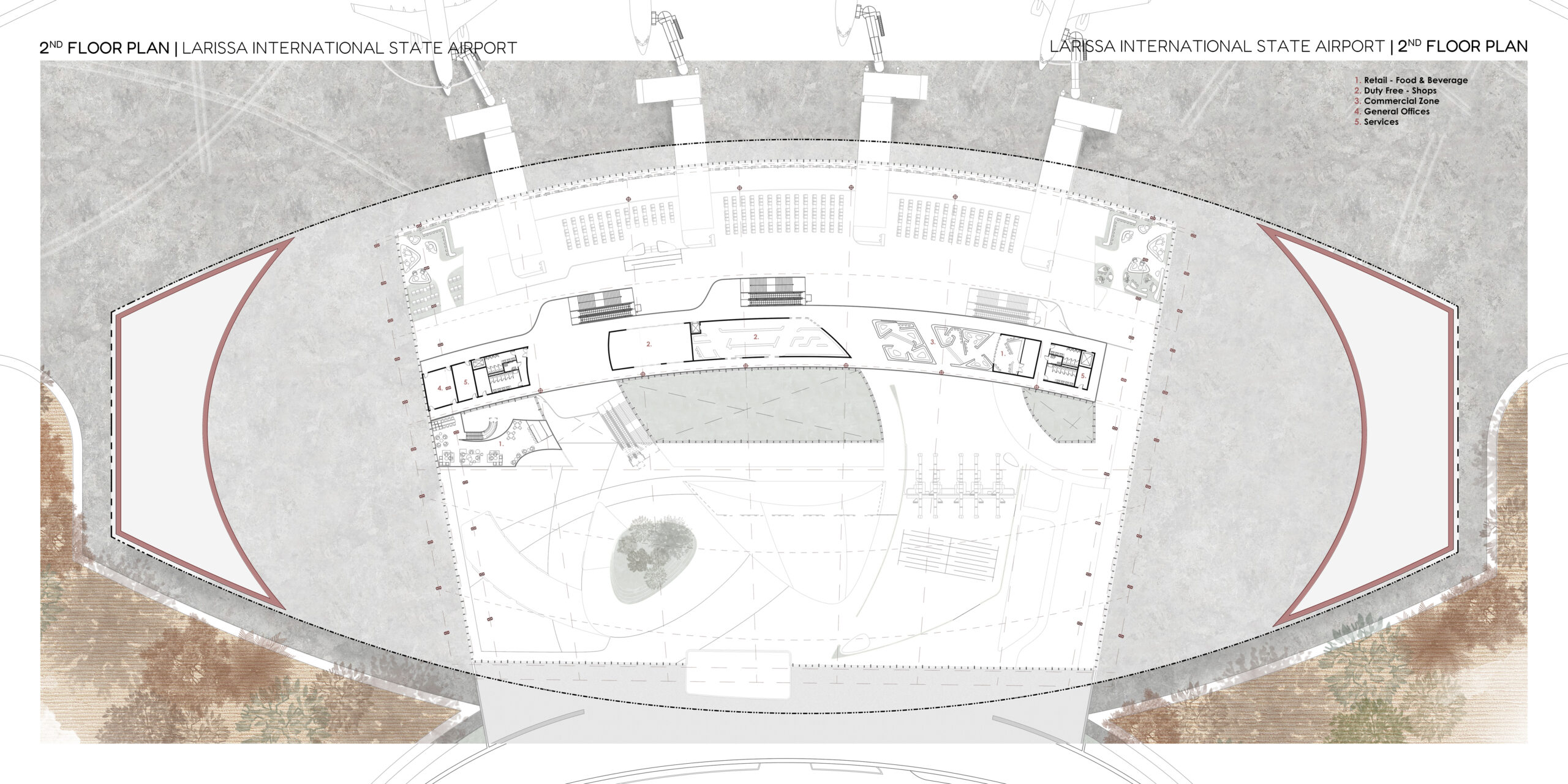
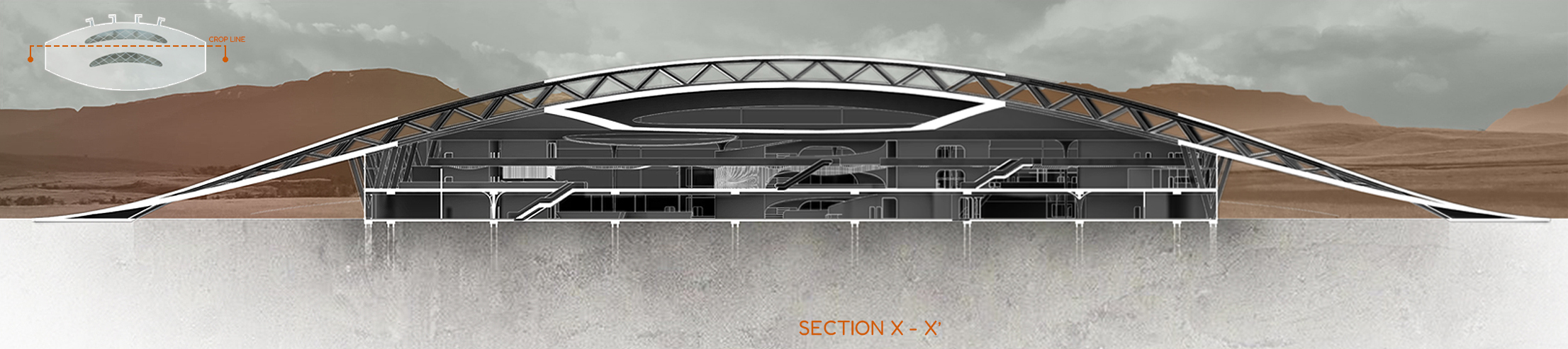
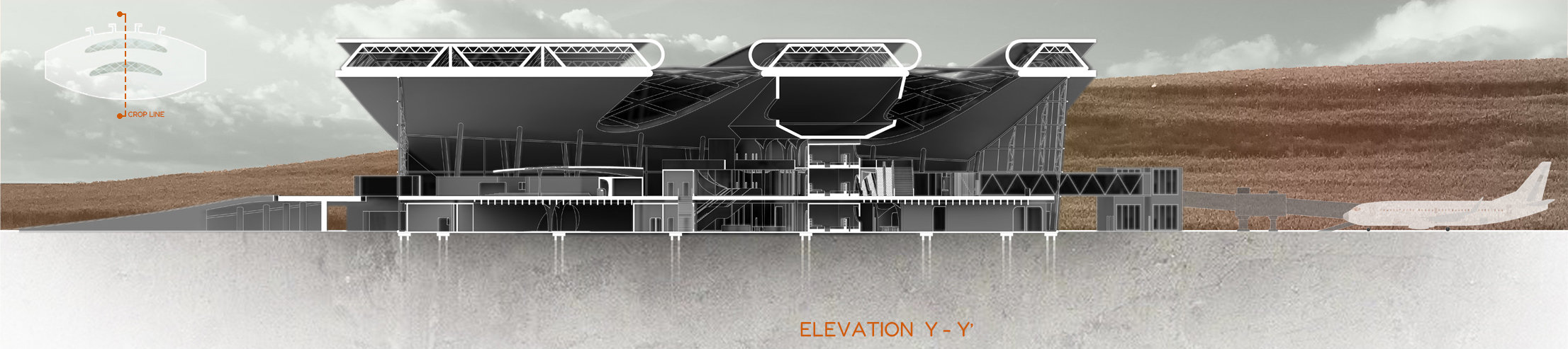
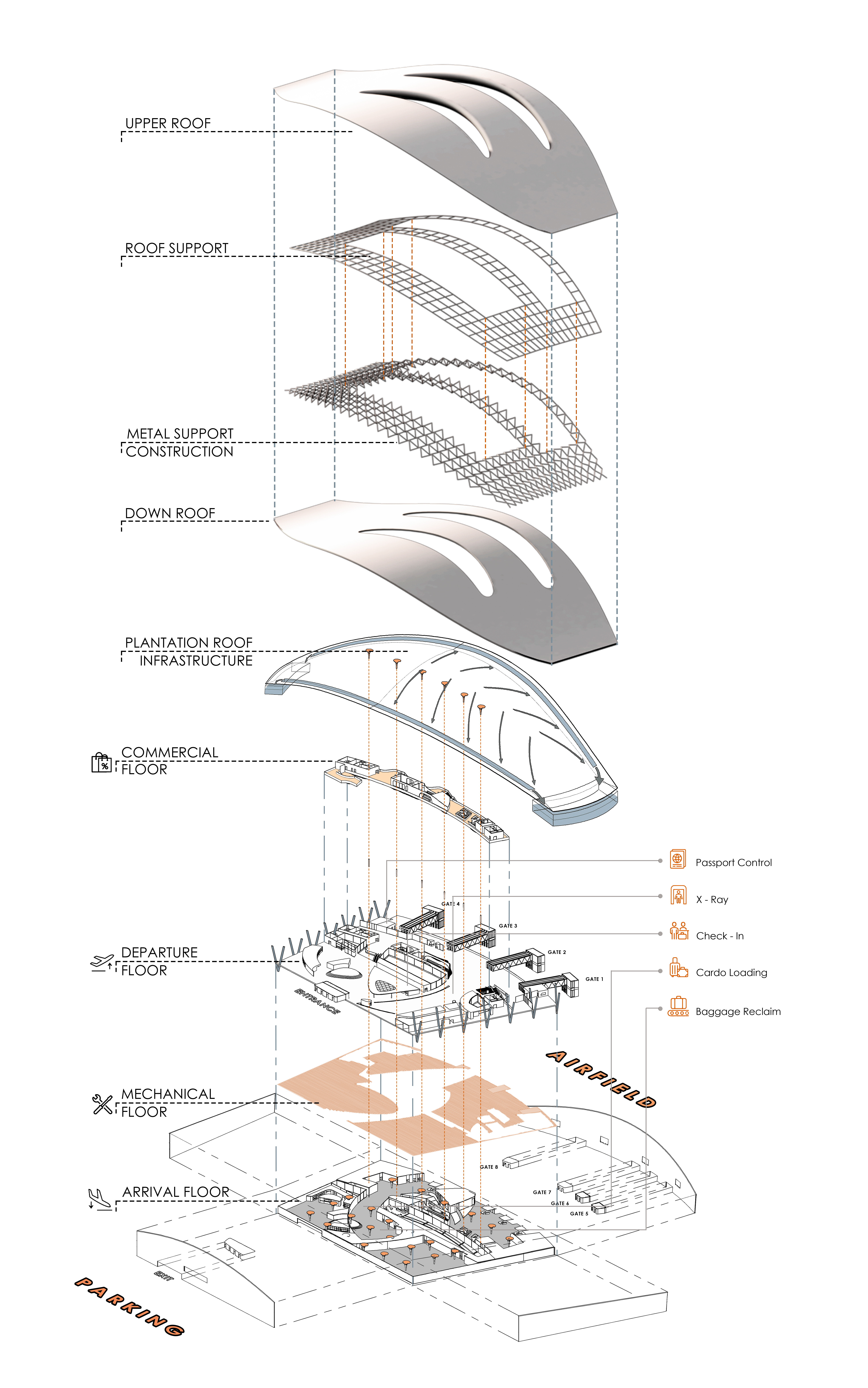
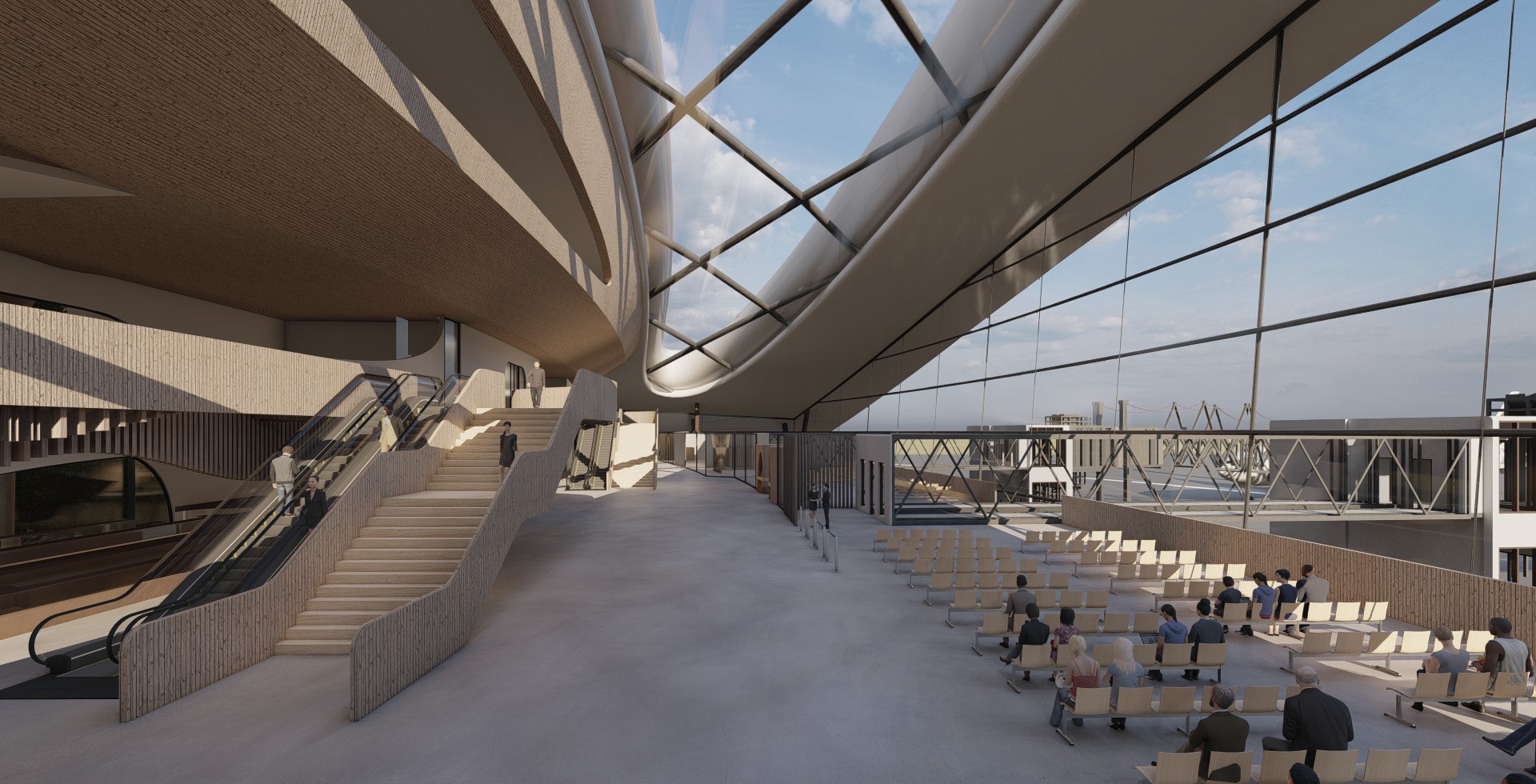
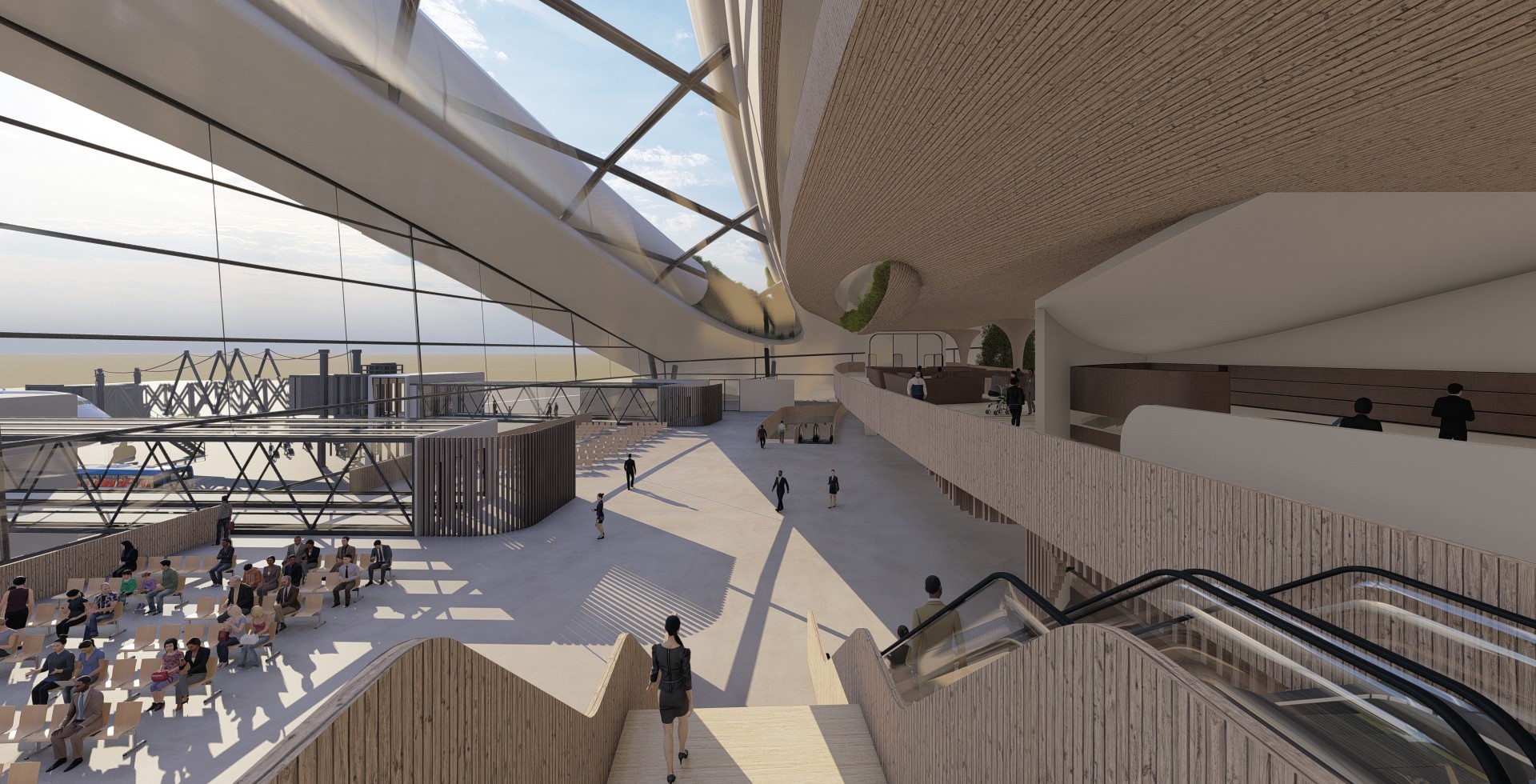
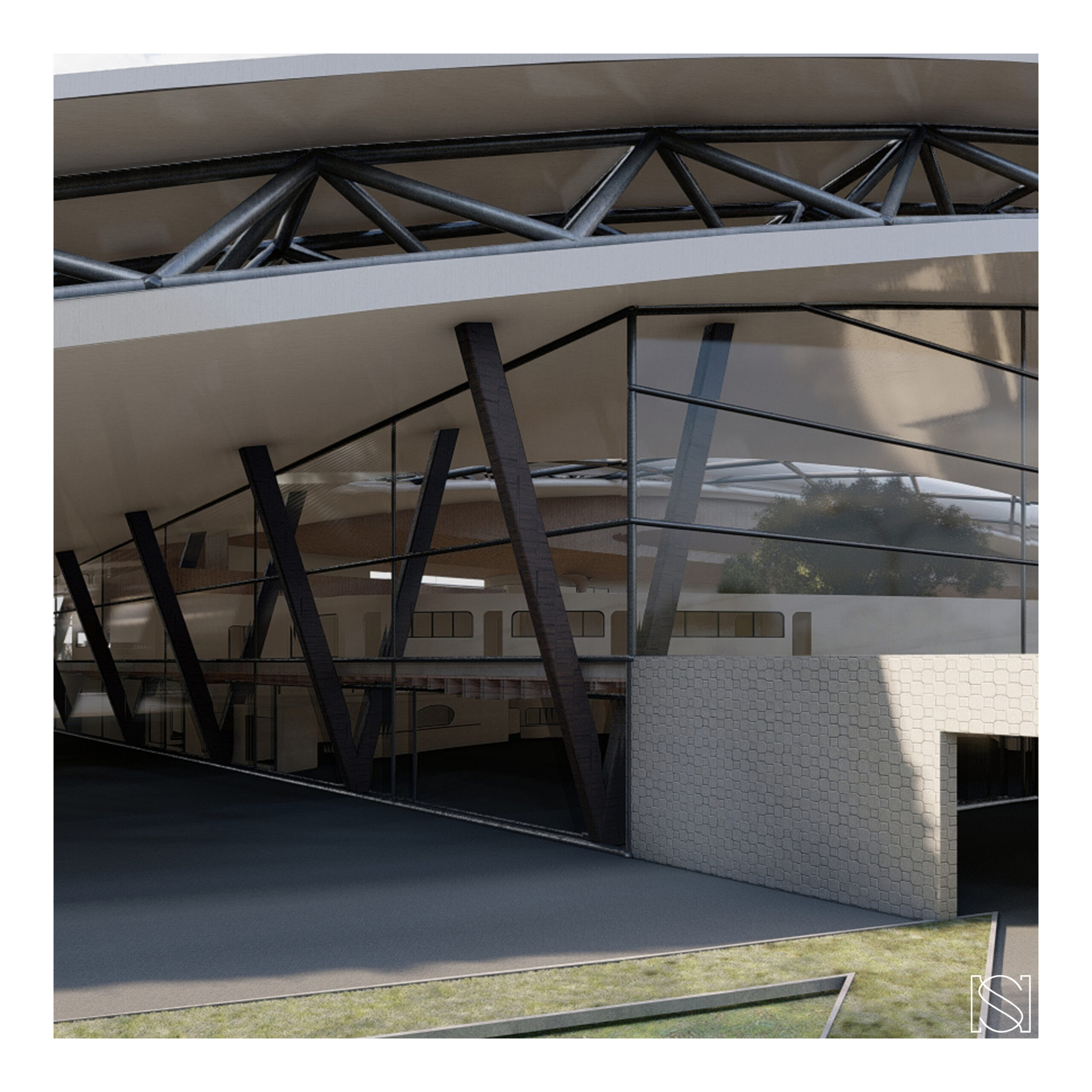
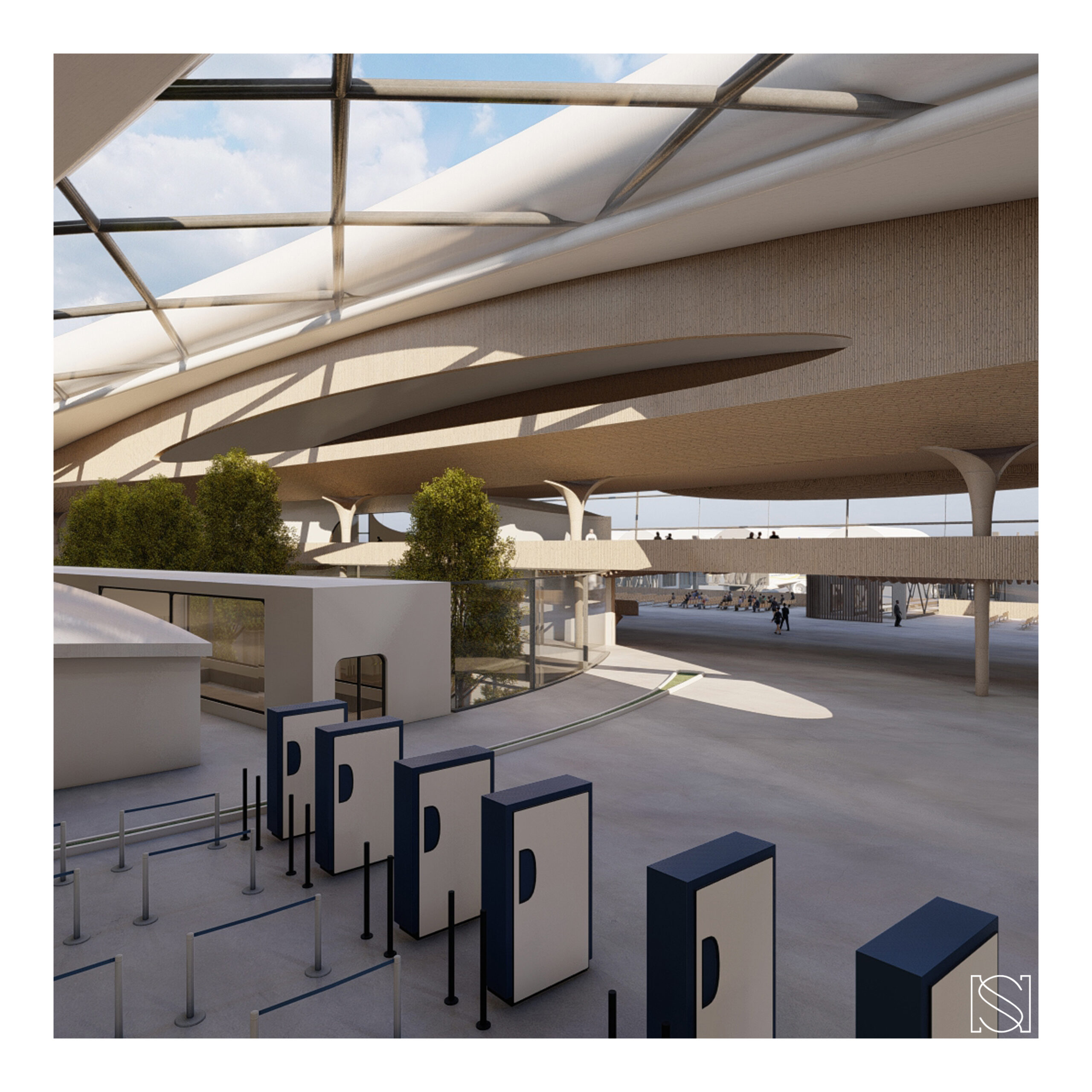
It must fully meet all the complex functional requirements. It is a facility with a strict building program. In its inner space, the movement is continuous, in a two-way shape. Those who cross it do not leave in the direction from which they came. The traffic flows are specific, and the public spaces regulate the accessibility of the world to those, depending on the reason for their visit. It is not a building you choose to visit. If you book an air trip, you must cross its interiors. Consequently, the elements that make it up, symbolical or not, remain with the passenger as memories of the place he passes or visits.The main role in the design of an airport terminal building is occupied by its roof. After several design attempts, I ended up creating a roof with a similar shape to that of the grain of wheat. An additional goal was the architectural design without altering the natural terrain of the fields that extend into the area. To achieve something like this, the ground and specifically the fields that will be replaced by all the facilities of the air station would have to be relocated. The proposed design solution refers to an industrial roof that touches the ground at its ends, while smoothly rising in the middle, creating the feeling of a “hill”. The ground in turn intervenes on the constructed roof maintaining the “smooth morphological continuity” of the area. Whereas, all the airport functions are completely covered and protected by its roof, just as the husk of the grain of wheat covers and protects its interior.
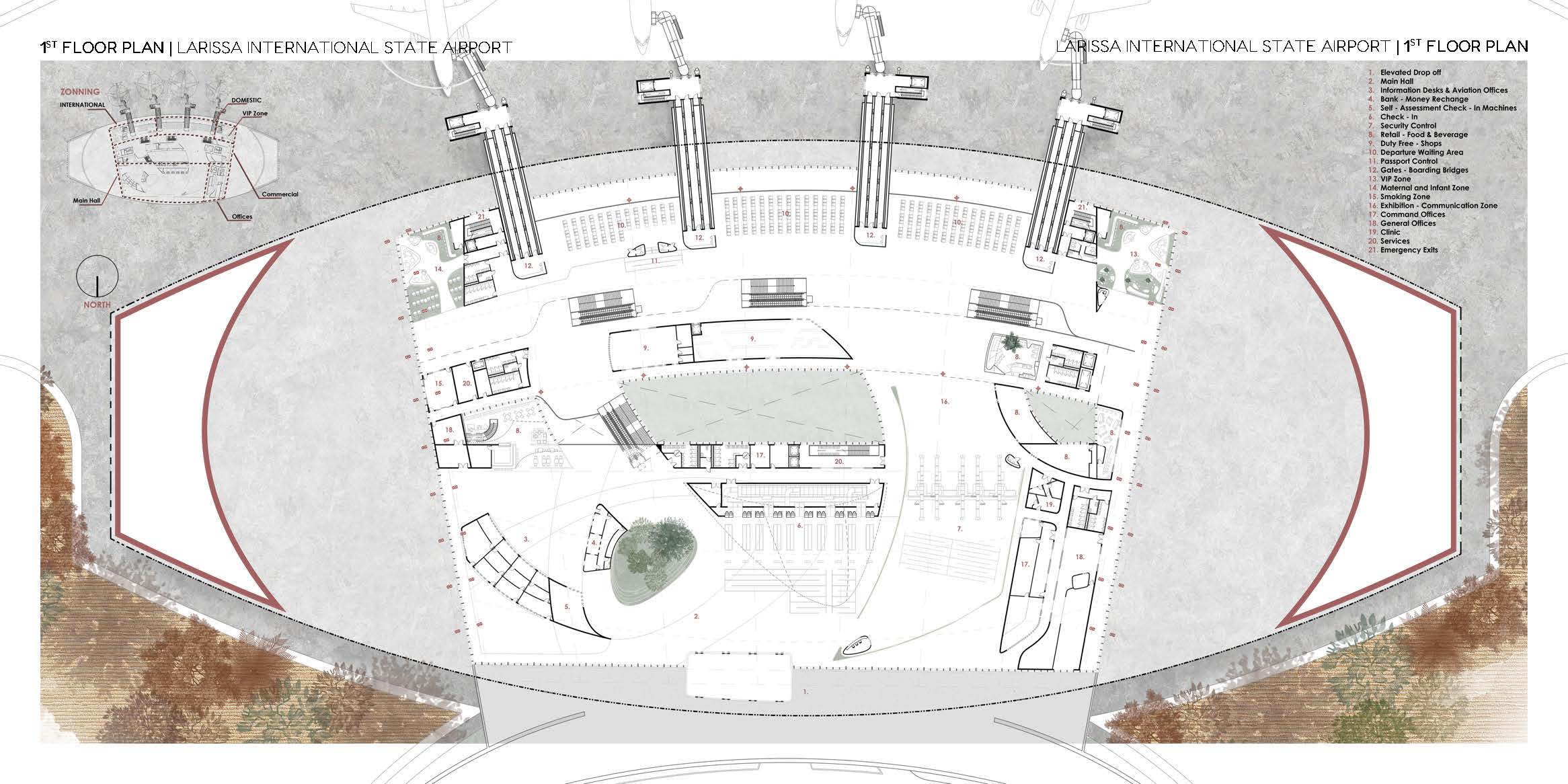
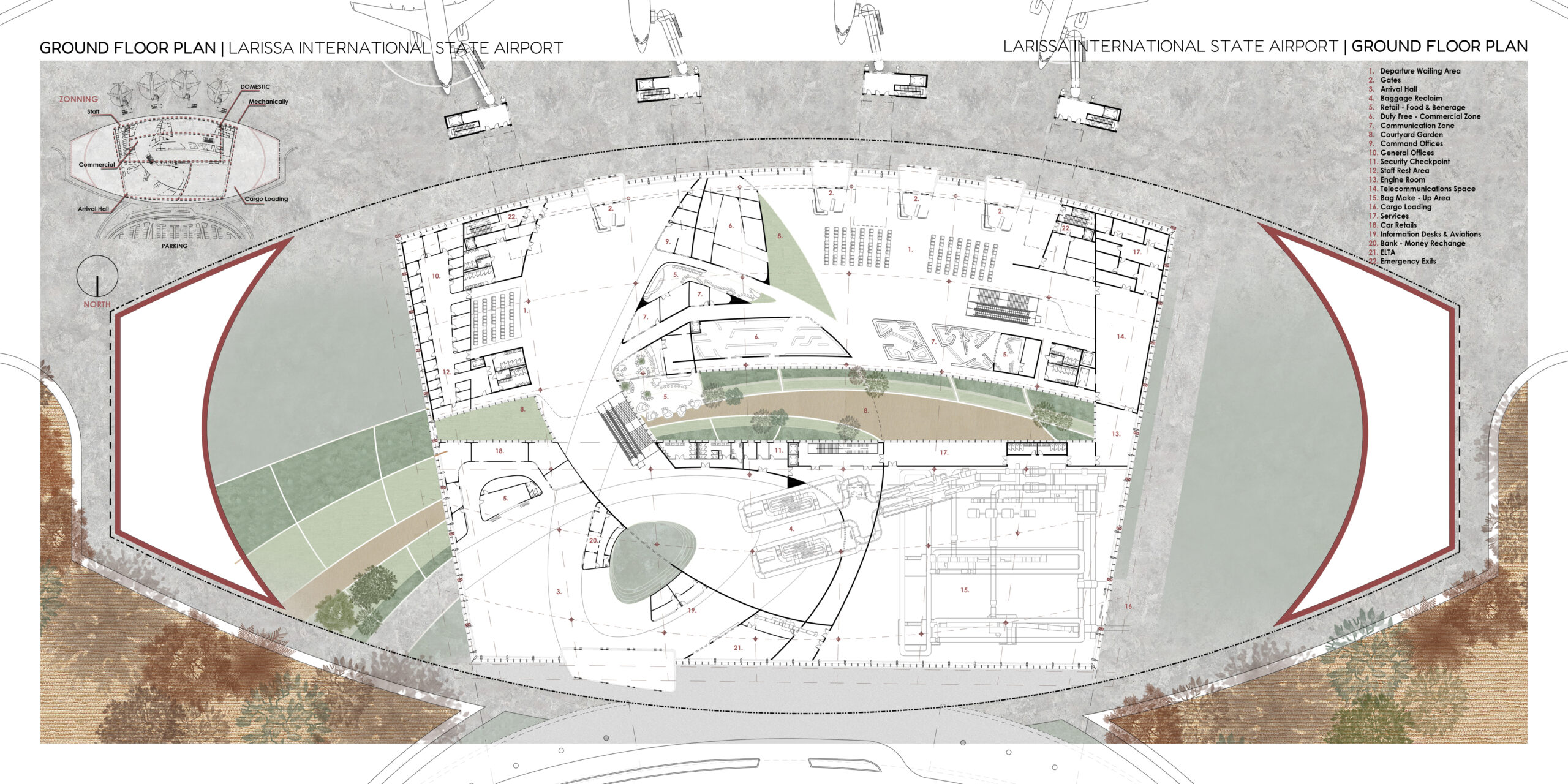
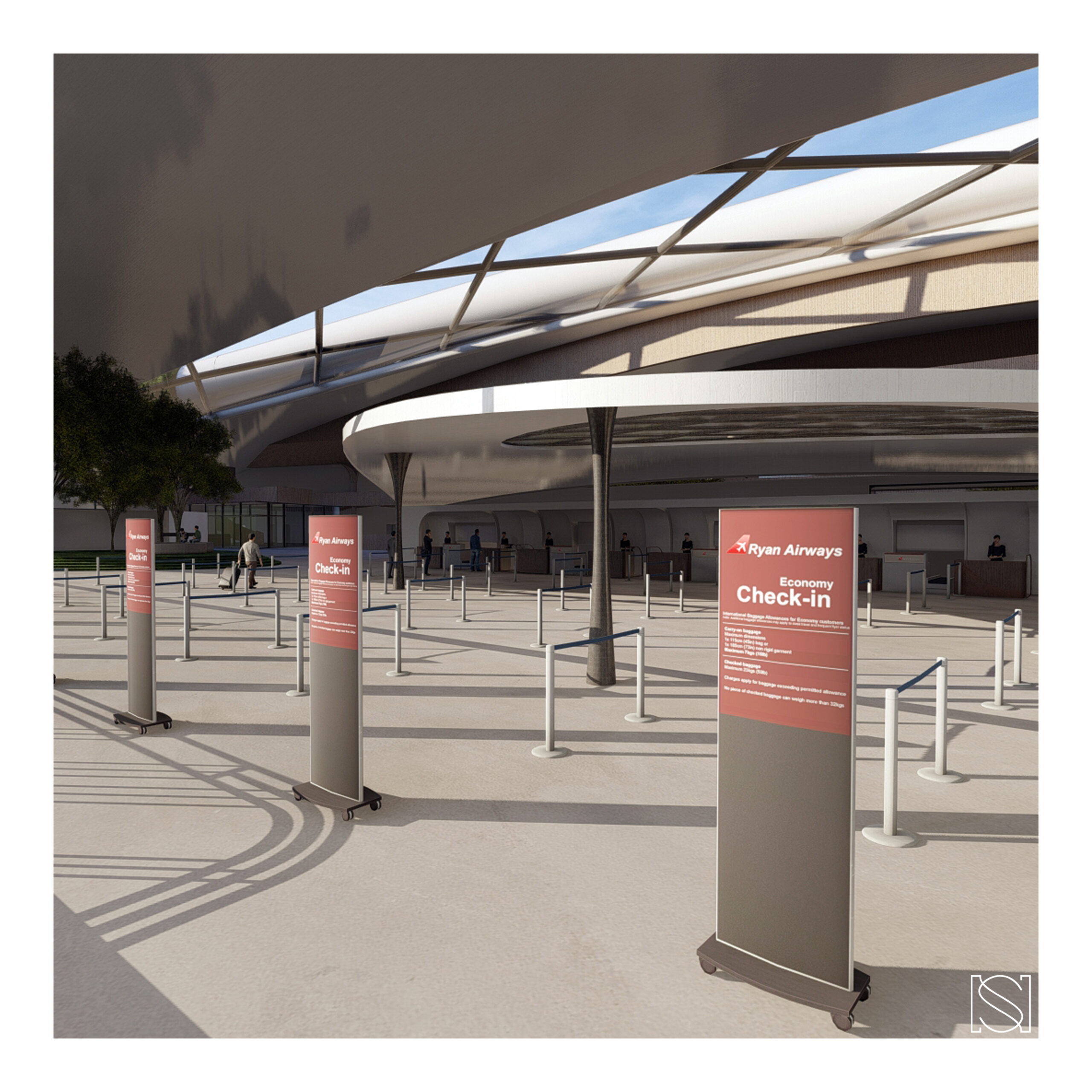
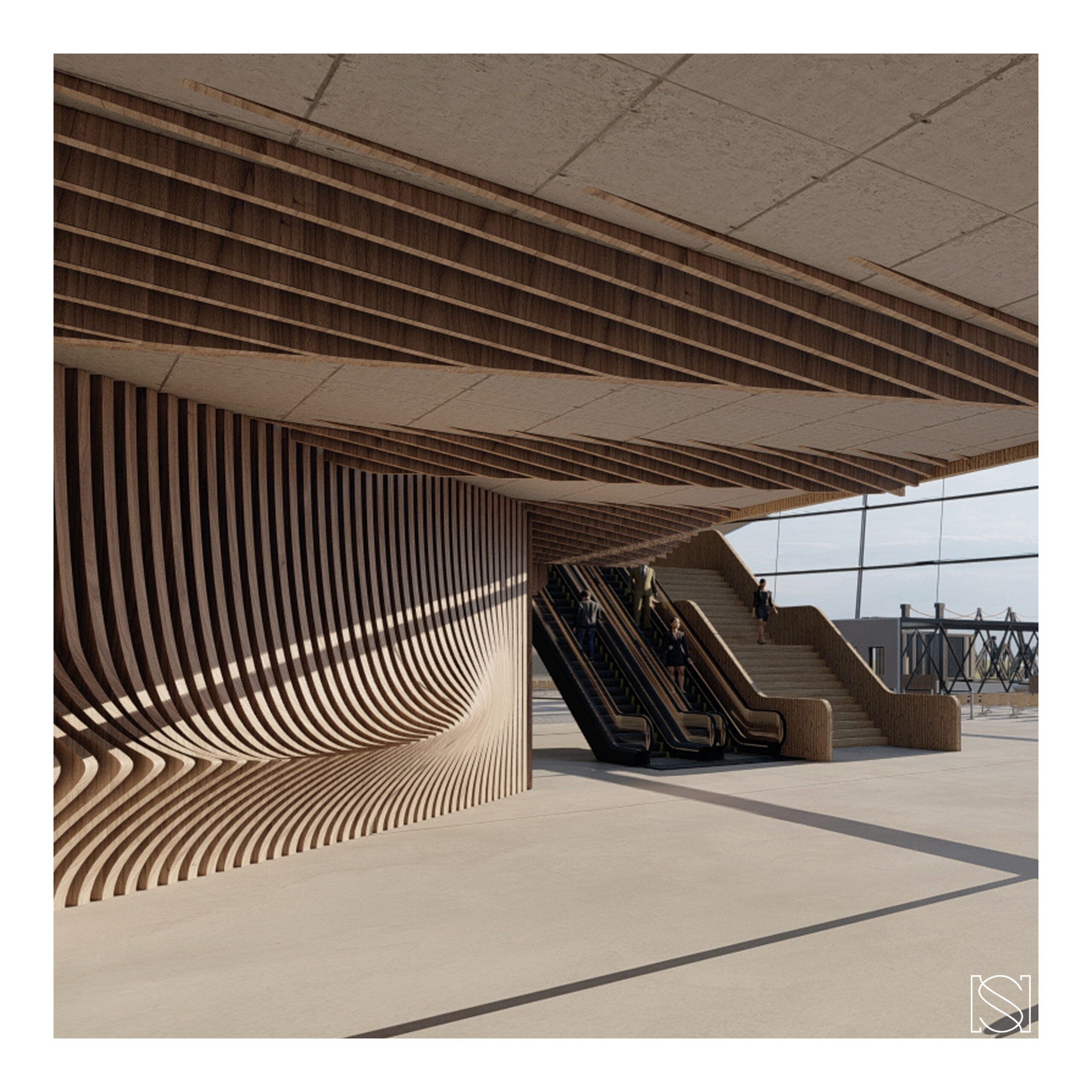
“ The design of curves, spaces, and elements, even the shape of notice boards, railings, and service desks must fit together. The passenger traversing the building must experience an entirely designed environment, in which each part derives from another and altogether belong to the same morphological and organic world.” For those reasons, the interior of the building has preserved in several places the element of curvature that derives from the form of its ceiling. The shaped interior spaces follow the basic curves created by the projections of the housing. In addition, the canvas of the architectural floor plan on which has been placed the necessary support columns was designed in the same way. The element of the curve also appears in the smallest scale points, such as the frames of the openings. Finally, the green design occupies a large area inside the building, with curvated patios covered by grain fields. Above those green areas, there are peculiar openings that offer the appropriate lighting for their maintenance. The building is clad entirely in glass around the perimeter to allow natural light to enter its interior. While the slope of the ceiling is structured in such a way that shading is achieved in the places where people stay for a long time.